
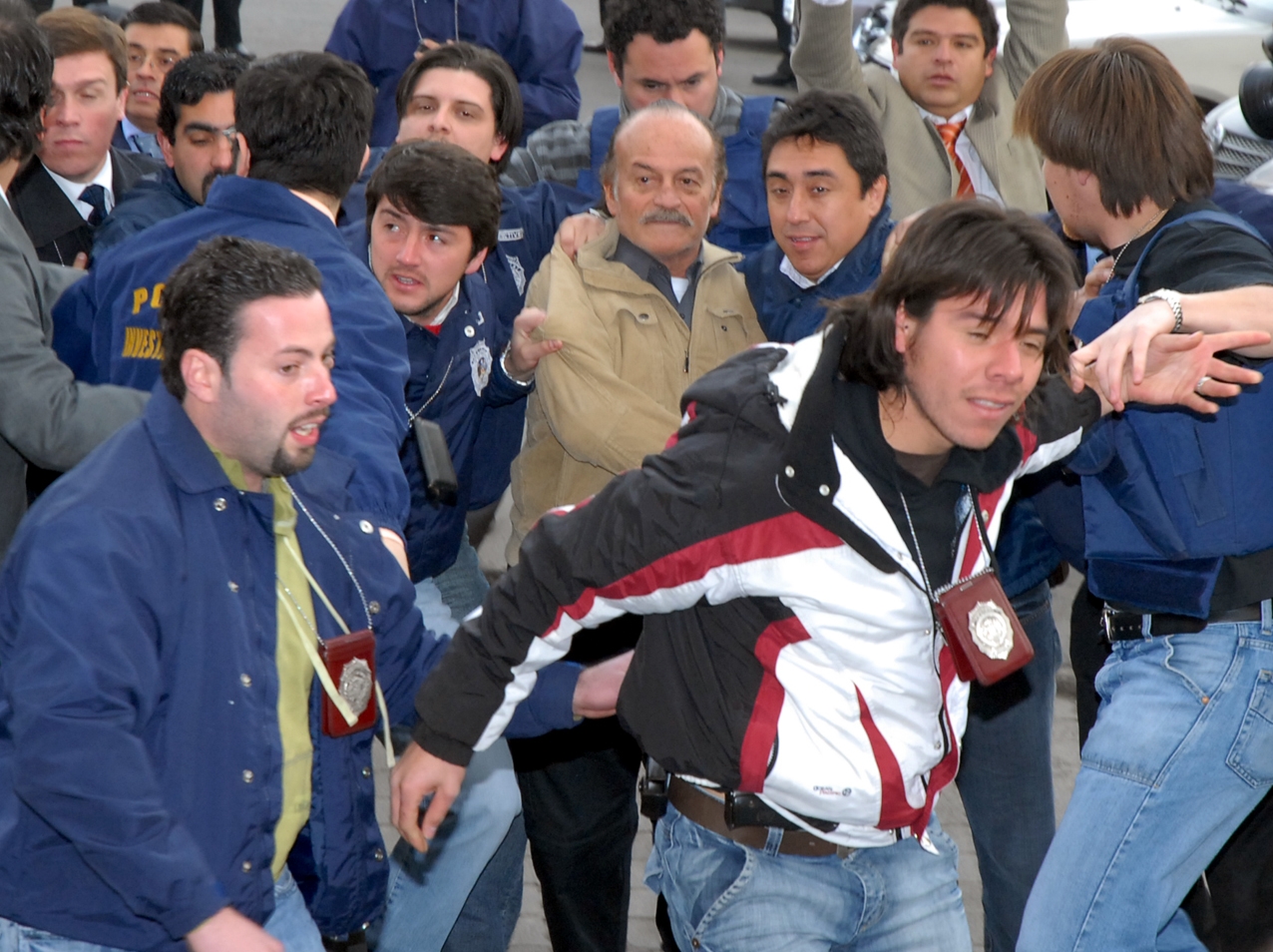
LISTADO DE AGENTES DE LA DINA RECOPILADO POR LEON GOMEZ ARANEDA
La siguiente recopilación fue realizada por el historiador y escritor León Gómez Araneda. Los uniformados aparecen por región del país y con los grados y cargos que servían entre los años 1973 y 1975, estos son los que conocen el destinos de los desaparecidos y asesinados por la dictadura militar chilena.
Ellos estuvieron a cargo de los campos de concentración, casas de torturas, fueron responsables de los asesinatos, ejecuciones y desparecimientos cometidos en sus zonas, muchos de ellos pasaron a formar parte de la DINA.
——————————————————————————-
Estado mayor de la dirección de inteligencia nacional, DINA
1.Coronel Juan Manuel Contreras Sepúlveda
2.Coronel Víctor Hugo Barría Barría
3.Tte. Coronel Pedro Octavio Espinoza Bravo
4.Cap. Fragata Sergio Barra von Kutschmann
5.Tte. Coronel Vianel Valdivieso Cervantes
6.Tte. Coronel Juan Saldías Stappung
7.Tte.Coronel Hugo Prado Contreras
8.Tt e. Coronel Manuel Manríquez Moyano
9.Tte.Coronel Jerónimo Pantoja Hernández
10.Tte. Coronel Alberto Elissalde Muller
11.Cap Corbeta Alejandro Campos Rehbein
12.Cap Corbeta Sergio Peñaloza Marusic
13.May Patricio Luvecce Massera
14.May Raúl Eduardo Iturriaga Neumann
15.May Marcelo Moren Brito
16.May Carlos Parera Silva
17.May Fernando Gómez Segovia
18.May Augusto Deitchler Guzmán
19.May Rolf Wenderoth Pozo
20.May Jorge Iturriaga Neumann
21.May Julio Cerda Carrasco
22.May Aldo José Briones Morales
23.May Marcos Derpich Miranda
24.May Manuel Palacios Burgos
25.May Carabineros EduardoEspinoza Paielle
26.Capt Francisco MaximilianoFerrer Lima
27.Cap Gerardo Hubert Olivares
28.Cap Alejandro Burgos de Beer
29.Cap Abel Sepúlveda Gutiérrez
30.Cap Juan Morales Salgado
31.Cap Sergio Ramón Rocha Aros
32.Cap Luis Alberto Medina Aldea
33.Cap Jorge Aro Peigneguy
34.Cap Juan Hernán Sanzani Tapia
35.Cap Amnando Fernández Larios
36.Cap Adolfo Bom Pineda
37.Cap Jaime Vergara Parada
38.Cap Eugenio Videla Valdebenito
39.Cap Alfonso Faúndez Norambuena
40.Cap Carab. Gemmán Barriga Muñoz
41.Tte Miguel Krassnoff Marchenko
42.Tte Jorge Escobar Fuentes
43.Tte Julio García Covarrubias
44.Tte Manuel Vásquez Chahuan
45.Tte Rolando Mosqueira Zarpa
46.Tte René Riveros Valderrama
47.Tte Juan Cheminelli Fullerton
48.Tte Nelson Edgardo Haase Mazzei
49.Tte Hugo Acevedo Godoy
50.Tte Guillemmo Salinas Torres
51.Tte Juan Delmás Ramírez
52.Tte Sergio Antonio Ojeda Bennett
53.Tte Fernando Laureani Maturan
54.Tte Cristoph Georg Willeke Floe
55.Tte Cados Labarca Metzger
56.Tte Mario Igualt Ramírez
57.Tte Héctor Irazábal Lobos
58.Tte Jorge Nazar Sabaj
59.Tte Von Furstenberg
60.Tte Jorge Sarah Olger
61.Tte Carabin.Miguel Hernández Oyarzo
62.Tte Ricardo Lawrence Meires
63.Tte Jaime Hernán López Abarca
64.Tte Emilio Sajuria Alvear
65.Tte Genaro Godoy
66.Tte Enrique Augusto Wemer Haase
67.Tte Winston Maximiliano Donders Espinoza
68.Tte Guillermo Washington González Betancoun
69.Tte Marina Daniel Gimpert Corvalán
70.Subtte Gastón Ramos Cid
71.Subte Alvaro Corvalán Castilla
72.Subtte Patricio Castro
73.Subtte Carabin.Ingrid Olderock
74.Gendarmen Orlando José Manzo Durand
——————————————————————————–
Suboficiales y clases adscritos a la DINA
1.Suboficial Osvaldo Romo Mena
2.Suboficial Tulio Pereira
3.Suboficial Guillenno Jorquera Gutiérrez
4.Sargento Humberto Tapia Barraza
5.Cabo Ejér. Basclay Zapata Reyes
6.Cabo Ejér. Elías Camus Camus
7.Cabo Ejér. Héctor Palma Rodríguez
8.Cabo Carab.Pedro René Alfaro Fernández
9.Cabo Carab.ErnilioTroncoso Vivallos
10.Cabo Carab.Manuel Leyton Robles
11.Cabo Carab.Heriberto Acevedo Acevedo Agr. “Caupolicán”
——————————————————————————–
Listado por regiones militares de los 521 oficiales en servicio entre 1973 y 1975.
I Region Tarapacá.
1.G.B.Carlos Forestier Haensgen Comandante VI Div.de Ejército
2.Gen. Luis Anura Carnpos Vásquez Jefe I Zona de Inspec.Carab
3.Cor. Sergio Dela Fuente Yurescik Jefe E.M.VI D.E
4.Cor. Odlanier Mena Salinas Cdte. Reg. “Rancagua” de Arica
5.Cor. Víctor Azócar Echeverría Prefecto Carabineros de Arica
6.Cor. Erick Claussen Sparenberg Cdte.Ala I “Los Cóndores”
7.Cor. Raúl Martínez Mena Cdte. Reg. “Carampangue” de Iquique
8.Cfr. Salvador García Baste Cdte. Dest.IM “Lynch” de Iquique
9.TC. Hector F.Leyton Galan Cdte. Reg. “Granaderos” de Iquique
10.TC . Florencio Zambrano Román Cdte.Reg. “Dolores” de Iquique
11.TC. Edmundo Jahnsen Merino Cdte. Reg. “Tarapacá” de Iquique
12.TC. Luis Valenzuela Solís de O. Cdte.Reg. “Pisagua” de Iquique
13.TC. Eduardo Oyarzun Sepúlveda 2 Cdte. “Rancagua” de Arica
14.TC. Ramón Larrain Larraín 2 Cdte “Carampangue” de Iquique
15.May. Jorge Feliú Madinogoitía 2 Cdte “Granaderos”
16.May. Sergio Parra Valladares 2 Cdte “Dolores”
17.May. Carlos de la Barra Daniels 2 Cdte. “Tarapacá”
18.May. Plácido Muñoz Faúndez 2 Cdte “Pisagua”
19.Cap. Sergio Espinou Davies oficial Reg. “Carampangue”
20.Cap. Enrique Cid Goables Auditor de Guerra
21.Cap. Florencio Tejos Martínez
22.Cap. Hugo Elzo
23.Cap. Juan Enrique Sinn Bruno Auditor de Guerra
24.Cap. Sergio Benavides Oficial Reg. “Carampangue”
25.Cap. Adrian Figueroa Oficial Reg. “Carampangue”
26.Tte. Conrado García Oficial Reg. “Carampangue”
27.Tte. Juan Antonio Muñoz Muñoz Ofic.Comisaría de Iquique…



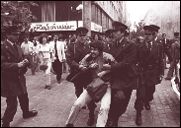 Actualmente, Chile vive un período considerado por muchos como un auge económico y de “modernización” sofisticada. Sin embargo, la democracia que se construyó en Chile a partir de 1990, conocida como “la transición,” yace sobre el ocultamiento de la verdad y sobre la impunidad que protege a los responsables de las violaciones que dejaron sus secuelas en las vidas de miles de …